
Waking up to a freezing cold shower is a frustration no homeowner wants to experience, especially during the cooler months in the Sunshine State. When your unit fails, seeking professional Hot Water System Repairs is the only way to ensure your household returns to comfort quickly and safely. In Queensland, the high humidity and variable water quality can take a toll on heating elements, tanks, and valves, making regular maintenance and timely interventions critical for every property owner.
Whether you are dealing with a minor leak or a complete system failure, having a trusted partner is essential. For those seeking reliable assistance, Craig Eveleigh Plumbing provides top-tier expertise across the region, ensuring that your plumbing infrastructure remains in peak condition year-round. Understanding the nuances of your specific system can save you time and money before a minor glitch turns into a major emergency.
Why You Should Never Ignore Hot Water Issues
It is tempting to ignore a small drip or a slight change in water temperature, but these are often the early warning signs of a failing unit. Addressing the need for Hot Water System Repairs early can prevent catastrophic tank bursts or electrical hazards. In Queensland’s climate, corrosion can accelerate if sacrificial anodes are not checked, leading to irreversible damage to the storage cylinder.
The Financial Impact of Delay
Delaying a repair doesn’t just result in cold water; it hits your wallet. A leaking valve can waste hundreds of liters of water a month, significantly increasing your utility bills. Furthermore, an inefficient system works harder to heat water, consuming more electricity or gas than necessary.
Safety Risks of Faulty Systems
Hot water units involve high pressure and, in many cases, high voltage or flammable gas. A malfunctioning Pressure Temperature Relief (PTR) valve can lead to dangerous pressure buildup. Professional Hot Water System Repairs ensure that these safety mechanisms are functioning correctly to protect your family and your home.
Common Signs Your System Needs Professional Help
Recognizing the symptoms of a struggling water heater is the first step toward a resolution. If you notice any of the following, it is time to call in the experts.
1. Fluctuating Water Temperatures
If your water goes from boiling hot to ice cold in seconds, the thermostat or the heating element is likely failing. This is a common reason for requesting Hot Water System Repairs in residential suburbs.
2. Discolored or Rusty Water
Brown or “rusty” looking water often indicates that the internal lining of your tank is corroding. While sometimes this can be solved by replacing the anode rod, persistent discoloration often signals the end of the tank’s lifespan.
3. Strange Noises
Popping, banging, or rumbling sounds coming from the tank usually mean there is a buildup of sediment at the bottom. As the water heats, bubbles form under the sediment, causing the noise. This buildup reduces efficiency and can eventually damage the tank.
4. Leaking Around the Base
A small amount of water from the overflow pipe is normal, but standing water around the base of the tank is a major red flag. This often indicates a fracture in the cylinder itself.
Types of Systems and Their Specific Repair Needs
In Queensland, we use a variety of technologies to heat our water. Each requires a unique approach when it comes to Hot Water System Repairs.
Electric Hot Water Systems
Electric units are common but can be expensive to run if they aren’t maintained.
- Heating Elements: These can burn out over time due to mineral deposits.
- Thermostats: A faulty thermostat can lead to water that is dangerously hot or not hot enough.
Gas Hot Water Systems
Gas systems are favored for their “instant” heating capabilities but involve complex burner assemblies.
- Pilot Light Issues: If the pilot light won’t stay lit, there may be a thermocouple issue.
- Burner Blockages: Dust and debris can prevent the gas from igniting properly, requiring professional cleaning during Hot Water System Repairs.
Solar Hot Water Systems
Given our abundance of sunshine, solar is a popular choice in Queensland. However, they are more complex due to the roof-mounted components.
- Panel Leaks: Hail or debris can damage solar collectors.
- Circulation Pumps: In split systems, the pump that moves water between the tank and the panels can fail.
Heat Pump Systems
Heat pumps are incredibly efficient but rely on refrigerant gases and compressors.
- Fan Failures: The fan that pulls in ambient air can become obstructed or fail mechanically.
- Evaporator Clogs: Dirt on the evaporator coils can force the system to run constantly.
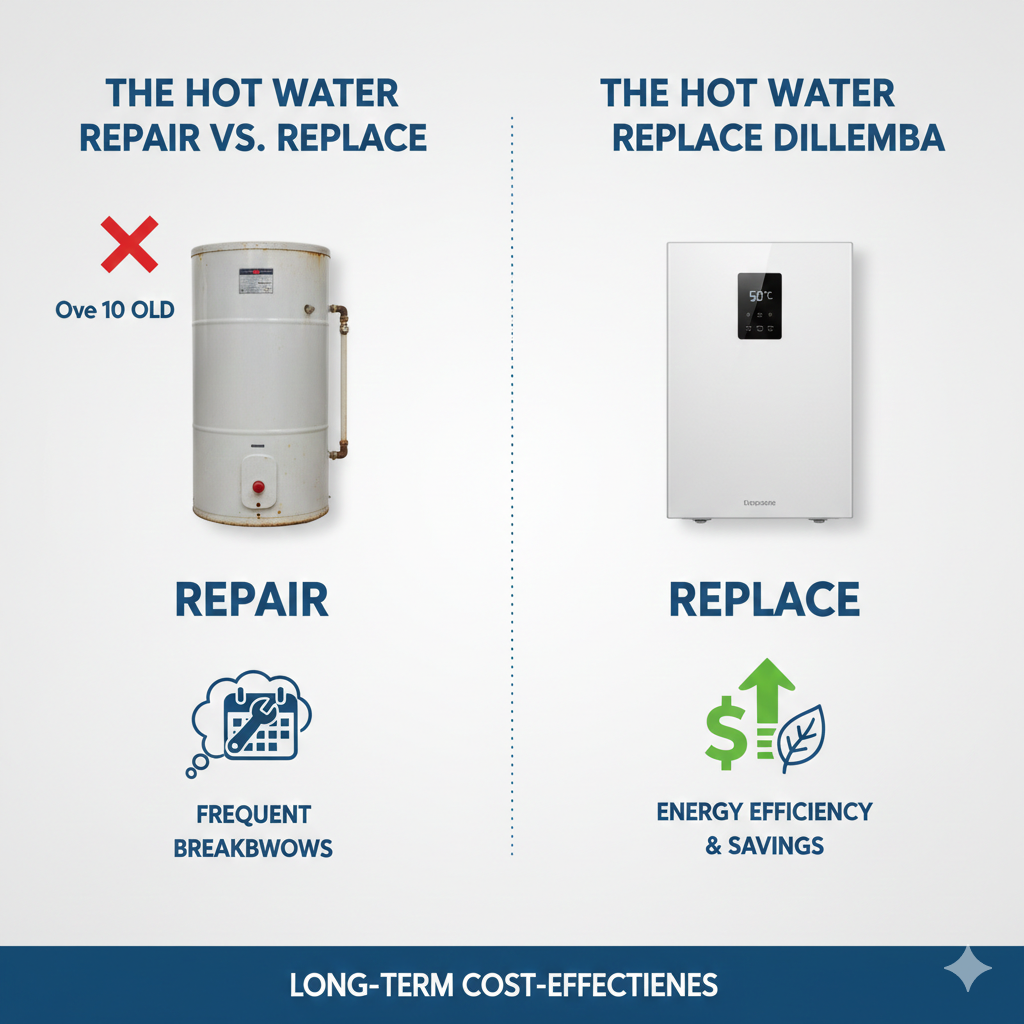
The Repair vs. Replace Dilemma
One of the most frequent questions we hear during Hot Water System Repairs is whether it is better to fix the old unit or buy a new one.
Assessing the Age of the Unit
Most hot water systems have a lifespan of 8 to 12 years. If your system is over 10 years old and requires a major component replacement, such as a new tank or a solar collector, replacement is often more cost-effective in the long run.
Frequency of Breakdowns
If you find yourself calling for Hot Water System Repairs every few months, the cumulative cost will quickly surpass the price of a brand-new, energy-efficient unit.
Modern Energy Efficiency
Newer models, particularly 5-star gas units or heat pumps, use significantly less energy. The savings on your monthly bill can help offset the initial investment of a replacement unit.
Technical Comparison: Repair Costs and Lifespans
| System Type | Average Lifespan | Common Repair Cost Range | Primary Failure Point |
| Electric Storage | 10-12 Years | $200 – $600 | Heating Element / Thermostat |
| Gas Continuous | 12-15 Years | $250 – $700 | Heat Exchanger / PC Board |
| Solar Hot Water | 15+ Years | $300 – $900 | Pump / Sensors / Panel Leaks |
| Heat Pump | 10-15 Years | $400 – $1,200 | Compressor / Fan Motor |
Step-by-Step: What Happens During a Professional Repair?
When you book Hot Water System Repairs, a licensed plumber follows a strict protocol to ensure safety and compliance with Queensland regulations.
Initial Diagnostic Testing
The plumber will first check the power or gas supply. For electric units, they use a multimeter to check the continuity of the heating element and thermostat. For gas units, they inspect the gas pressure and burner flame.
Pressure and Valve Inspection
The PTR valve and the cold water expansion valve are tested. These valves are designed to release water as it expands during the heating process. If they are seized or leaking excessively, they are replaced immediately.
Anode Inspection and Replacement
In storage tanks, the sacrificial anode is a metal rod that “sacrifices” itself to corrosion so the tank doesn’t have to. During comprehensive Hot Water System Repairs, checking this rod can add years to your system’s life.
DIY Tips: What You Can Check Before Calling a Plumber
While most Hot Water System Repairs must be handled by a licensed professional—especially those involving gas or 240V electricity—there are a few basic checks you can perform.
- Check the Circuit Breaker: Ensure the hot water switch in your electrical meter box hasn’t tripped.
- Inspect the Pilot Light: If you have an older gas system, check if the pilot light has gone out due to a gust of wind.
- Look for External Obstructions: For heat pumps, ensure there are no plants or debris blocking the air intake fans.
- Test the Relief Valve: Gently lift the lever on the PTR valve for a few seconds to ensure water flows and stops correctly.
Note: For any task involving the removal of covers or handling of gas lines, you must contact a qualified professional. You can find more information on licensing requirements through the Queensland Building and Construction Commission (QBCC).
The Importance of Maintenance in the Queensland Climate
Preventative maintenance is the best way to avoid the need for emergency Hot Water System Repairs. Queensland’s water can vary from “soft” to “hard” depending on your region. Hard water contains high mineral content which leads to scale buildup.
Flushing the Tank
Regularly flushing your storage tank removes sediment that settles at the bottom. This prevents the “rumbling” noises and ensures the heating element isn’t buried in sludge.
Replacing Valves Every 5 Years
In Queensland, it is highly recommended to replace your safety valves every five years. The internal seals can perish in the heat, leading to leaks that compromise the entire system.
Inspecting Solar Glass
If you have a solar unit, checking the glass for cracks or significant grime buildup ensures you are getting the maximum “free” energy from the sun, reducing the strain on your backup booster.
Emergency Hot Water Situations
Sometimes, a repair cannot wait until Monday morning. You should seek immediate Hot Water System Repairs if:
- Water is gushing out of the tank uncontrollably.
- There is a strong smell of gas near the unit.
- The unit is making loud, explosive banging noises.
- You see smoke or scorched marks on the electrical covers.
In these instances, locate your isolation valve (usually near the bottom of the unit) and turn off the water supply, then switch off the power at the main board before calling a 24-hour plumber.
Choosing the Right Service Provider in Queensland
Not all plumbers are created equal when it comes to specialized Hot Water System Repairs. You need a technician who understands the specific brands and models common in the Australian market, such as Rheem, Dux, Rinnai, and Aquamax.
Licensing and Insurance
Ensure your plumber holds a valid QBCC license and has specific endorsements for gas-fitting if you have a gas system. Insurance is equally important to protect your property in the unlikely event of an accident during the repair.
Local Knowledge
A local Queensland plumber understands the specific water pressure issues and environmental factors that affect systems in your suburb. They are also more likely to have the necessary spare parts on their truck, leading to a faster resolution.
How Long Do Repairs Usually Take?
Most common Hot Water System Repairs, such as replacing a heating element or a valve, can be completed within 1 to 2 hours. However, if the issue involves a specialized part that needs to be ordered or if the system is located in a difficult-to-access spot (like a roof or a tight crawl space), it may take longer.
The goal of professional Hot Water System Repairs is to get the hot water flowing again on the same day. If the tank has burst, a replacement can usually be installed within 4 to 6 hours, depending on the complexity of the site.
Impact of Hot Water Efficiency on the Environment
In the modern era, repairs aren’t just about comfort; they are about sustainability. A malfunctioning system is a significant energy waster. By ensuring your unit is running efficiently through regular Hot Water System Repairs, you are reducing your household’s carbon footprint.
For those looking to upgrade, the Queensland government occasionally offers rebates for switching from inefficient electric storage to solar or heat pump technology. A professional plumber can advise you on these opportunities during a routine repair visit.
Conclusion
In summary, maintaining a reliable supply of heated water requires vigilance and professional care. From recognizing the signs of sediment buildup to understanding when a sacrificial anode needs replacing, being proactive about Hot Water System Repairs will save you from the “cold shower shock” and expensive emergency call-out fees. Whether you live in the heart of Brisbane or a coastal Queensland town, your hot water unit is one of the most hardworking appliances in your home—treat it with the expertise it deserves.
Quality workmanship and safety should always be your top priorities when dealing with high-pressure appliances. If you’re experiencing issues or simply want to ensure your system is compliant and safe, Contact us today to book an inspection or get a professional quote.
Frequently Asked Questions
1. How often should I have my hot water system serviced?
It is recommended to have a professional inspection every 3 to 5 years. This allows for the replacement of the sacrificial anode and safety valves, which prevents the need for major Hot Water System Repairs later on.
2. Why is my hot water system making a high-pitched whistling noise?
This is usually caused by high water pressure or a worn-out Pressure Temperature Relief valve. It is a sign that the system is under stress and requires professional Hot Water System Repairs to prevent a pipe burst.
3. Can a leaking hot water tank be repaired?
If the leak is coming from a valve or a pipe connection, it can be easily fixed. However, if the tank itself is leaking due to a fracture or corrosion in the cylinder, the entire unit will likely need to be replaced.
4. Why does my hot water smell like rotten eggs?
This odor is typically caused by a reaction between certain minerals in the water and the system’s anode rod. A plumber can perform Hot Water System Repairs by replacing the standard anode with one made from a different material to eliminate the smell.
5. Is it normal for the relief valve to leak water?
It is normal for the PTR valve to release a small amount of water (about a cupful) during the heating cycle. However, if it is constantly running or dripping heavily, it needs to be replaced by a professional.