
Navigating a Hot Water System Replacement in Queensland doesn’t have to be a stressful ordeal. Whether you’ve woken up to an icy shower or noticed a leaking tank, understanding your options is the first step toward restoring comfort to your home. In the Sunshine State, our unique climate and energy regulations influence which systems perform best, making it essential to choose a solution that balances upfront costs with long-term energy efficiency.
Choosing the right professional is just as important as choosing the unit itself. For a comprehensive look at the various technologies available, you can explore this detailed Hot Water Systems guide to help identify which model suits your household’s specific consumption patterns before committing to a full installation.
Why You Need a Hot Water System Replacement in Queensland
Living in Queensland means dealing with high humidity and varying water qualities, which can take a toll on your plumbing infrastructure. Most systems have a lifespan of 10 to 15 years; once they hit this milestone, efficiency drops, and the risk of catastrophic failure rises.
Signs Your System is Failing
It’s rarely a sudden “death” for a water heater. Usually, there are warning signs that a Hot Water System Replacement is imminent:
- Discoloured Water: Rusty or muddy-looking water suggests the internal lining of your tank is corroding.
- Strange Noises: Popping or rumbling sounds indicate sediment buildup at the bottom of the tank.
- Frequent Repairs: If you are calling for emergency hot water repair every few months, it’s more cost-effective to replace the unit.
- Lack of Pressure: A significant drop in hot water pressure often points to internal blockages or valve failures.
Exploring Your Replacement Options
When it comes to a Hot Water System Replacement, you aren’t stuck with the same model you had before. Technology has moved forward significantly.
Electric Hot Water Units
Electric hot water units remain a popular choice in Queensland due to their lower upfront purchase price and ease of installation.
- Pros: Low initial cost, reliable, and easy to fit into tight spaces.
- Cons: Higher running costs unless paired with a solar PV system.
Gas Hot Water Systems
If you have a large family, gas hot water systems provide a “continuous flow” option, meaning you never run out of hot water.
- Natural Gas: Highly efficient if you have a street connection.
- LPG: A great alternative for Queensland homes without natural gas access.
Heat Pump Technology
Heat pumps are the rising stars of the Queensland market. They work like a fridge in reverse, extracting heat from our warm air to heat your water. They are incredibly efficient and can save you hundreds on annual bills.
Comparing the Costs: What to Expect
Budgeting for a Hot Water System Replacement involves more than just the price tag of the unit. You must factor in hot water plumber services, council permits, and potential upgrades to your electrical or gas lines.
| System Type | Estimated Unit Cost | Installation Complexity | Energy Rating |
| Electric Storage | $500 – $1,500 | Low | 1 – 2 Stars |
| Gas Continuous Flow | $800 – $2,000 | Moderate | 5 – 7 Stars |
| Solar Hot Water | $3,000 – $6,000 | High | 8 – 10 Stars |
| Heat Pump | $2,500 – $4,500 | Moderate | 7 – 9 Stars |
The Importance of Professional Hot Water Installation
While DIY projects are popular, a Hot Water System Replacement is strictly a job for licensed professionals. In Queensland, specific regulations (such as the QBCC requirements) ensure that installations meet safety and tempering valve standards to prevent scalding.
Why Hire Licensed Hot Water Plumber Services?
- Compliance: You receive a Form 4 compliance certificate, which is essential for insurance and property sales.
- Safety: Handling high-voltage electricity and pressurized gas is dangerous without the right training.
- Warranty Protection: Most manufacturers will void your warranty if the unit isn’t installed by a licensed plumber.
Emergency Hot Water Repair vs. Replacement
Sometimes, a quick fix is all you need. If your heating element or thermostat has failed, an emergency hot water repair might save the day. However, if the tank is leaking from the base, no amount of repair will fix the structural compromise. In these instances, a full Hot Water System Replacement is the only safe path forward.
Maximizing Efficiency with Hot Water Maintenance
Once your new system is in place, you want it to last. Regular hot water maintenance is the secret to extending the life of your investment.
Maintenance Checklist
- Sacrificial Anode: Check and replace the anode rod every 3-5 years to prevent tank corrosion.
- TPR Valve: Manually test the Temperature Pressure Relief valve every six months to ensure it isn’t seized.
- Flushing the Tank: Periodically flush the tank to remove sediment buildup, especially in areas of Queensland with “hard” water.
For more information on Queensland’s water quality standards and how they affect household appliances, you can visit the Queensland Government Water Supply website.
Choosing the Right Size for Your Queensland Home
A common mistake during a Hot Water System Replacement is choosing a unit that is too small for the household or too large for the space available.
Capacity Guide
- 1-2 People: 125L – 160L Electric or 16L/min Gas.
- 3-4 People: 250L – 315L Electric or 21L/min Gas.
- 5+ People: 400L Electric or 26L/min Gas.
Solar Hot Water: The Queensland Advantage
With over 280 days of sunshine a year, Queensland is the perfect place for solar. While the initial Hot Water System Replacement cost is higher for solar, the government rebates and energy savings usually see the system pay for itself within 4 to 6 years.
Types of Solar Systems
- Roof-Mounted (Thermosiphon): Both the tank and panels sit on the roof.
- Split Systems: Panels are on the roof, but the storage tank sits on the ground, making it more aesthetically pleasing and easier to maintain.
Understanding Local Regulations in Queensland
In Queensland, there are strict rules regarding the replacement of electric hot water systems. In some “gas-reticulated” areas, you may be encouraged or required to install more energy-efficient models like gas, solar, or heat pumps rather than a standard electric tank.
Tempering Valves
Every Hot Water System Replacement must include a tempering valve. This device mixes cold water with the hot water from your tank to ensure the water coming out of your taps is no hotter than 50°C, preventing accidental burns while allowing the tank to store water at 60°C to kill bacteria like Legionella.
Dealing with Emergency Situations
If your system bursts at 2 AM, you need emergency hot water repair experts who can isolate the leak and provide a temporary solution. In many cases, a temporary “loaner” unit can be installed until your chosen Hot Water System Replacement unit arrives.
Government Rebates and Incentives in Queensland
Navigating the financial side of a Hot Water System Replacement is easier when you account for available government incentives. Queensland homeowners are often eligible for various schemes designed to reduce the state’s carbon footprint.
Small-scale Technology Certificates (STCs)
When you opt for an energy-efficient Hot Water System Replacement using solar or heat pump technology, you can create STCs. These certificates act as a form of currency that can be traded or assigned to your installer for a significant upfront discount on the system cost.
Queensland Climate Smart Energy Savers
Periodically, the Queensland Government offers rebates specifically for the transition from inefficient electric hot water units to high-efficiency heat pumps or solar systems. It is always worth checking the current “Climate Smart” status before booking your installation to maximize your savings.
The Impact of Queensland’s Hard Water on Your System
Water quality varies significantly across Queensland, from the coastal regions to the inland areas. “Hard water” contains high levels of minerals like calcium and magnesium, which can drastically shorten the life of your unit.
Managing Sediment Buildup
Hard water leads to “scaling” inside your tank. This scale acts as an insulator, forcing your electric hot water units to work harder to heat the water, which eventually burns out the heating element. During a Hot Water System Replacement, we recommend installing a system with a heavy-duty anode to combat these minerals.
Filtration Solutions
If you live in an area known for high mineral content, adding a water filtration or softening system during your hot water installation can double the lifespan of your new unit and improve the performance of your household appliances.
Upgrading from Storage Tanks to Continuous Flow
One of the most common requests during a Hot Water System Replacement in Queensland is the move from a traditional bulky tank to a sleek, wall-mounted continuous flow system.
Endless Hot Water
With a gas hot water system (continuous flow), the water is heated on demand as it passes through a heat exchanger. This means no more running out of hot water halfway through a shower, which is a game-changer for large Queensland families.
Space-Saving Benefits
In modern Queensland townhomes where space is at a premium, removing a massive 315L storage tank during your Hot Water System Replacement can free up valuable outdoor or garage space. These units are roughly the size of a small suitcase and mount easily to external walls.
Smart Technology and Wi-Fi Integration
The latest generation of water heaters now features smart technology, allowing you to monitor and control your hot water usage directly from your smartphone.
Energy Monitoring
Modern hot water plumber services now include the setup of smart controllers that track exactly how much energy your system is using. This allows you to adjust temperature settings remotely, saving money while you are away on holiday.
Leak Detection Alerts
Some high-end systems installed during a Hot Water System Replacement come equipped with digital leak sensors. If the system detects an internal fault or a drop in pressure, it sends an alert to your phone, allowing you to call for emergency hot water repair before your home suffers water damage.
Solar PV vs. Dedicated Solar Hot Water
Many Queenslanders are confused about whether to install a dedicated solar hot water system or use their existing solar power (PV) panels to heat their water.
Using Solar Diverters
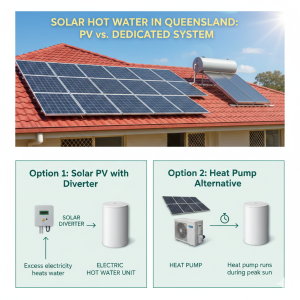
If you already have a large solar PV array, you might not need a dedicated solar thermal tank. During your Hot Water System Replacement, we can install a “solar diverter” that directs excess electricity from your roof into your electric hot water units instead of sending it back to the grid for a low feed-in tariff.
The Heat Pump Alternative
Alternatively, a heat pump can be timed to run only during the middle of the day when your solar panels are producing the most power. This effectively turns your hot water tank into a giant “thermal battery,” making your Hot Water System Replacement incredibly cost-effective.
Off-Peak Electricity Tariffs in Queensland
Understanding how you are billed for electricity is crucial when choosing your next system, especially in Queensland where Tariff 31 and Tariff 33 are common.
Tariff 33 (Economy Choice)
This tariff is available for at least 18 hours a day. It is the most common choice for a Hot Water System Replacement involving a storage tank, as it offers a lower rate while ensuring the water stays hot throughout the day.
Tariff 31 (Night Rate)
Tariff 31 is the cheapest rate but is only available for about 8 hours a night. If you choose this for your electric hot water units, you must ensure your tank is large enough (usually 250L+) to hold enough hot water to last your entire family until the next night’s heating cycle.
Conclusion
Deciding on a Hot Water System Replacement in Queensland is an investment in your home’s functionality and your family’s comfort. By weighing the pros and cons of electric, gas, and heat pump units, and ensuring you hire professionals for hot water installation, you can enjoy lower energy bills and consistent hot water for years to come. Don’t wait until your tank bursts; being proactive with your Hot Water System Replacement allows you to choose the best technology rather than rushing into a “panic buy” during an emergency.
Ready to upgrade? Our team provides expert advice and seamless installation to ensure your home stays warm. Contact us today to discuss your needs and get a quote today!
Frequently Asked Questions
How long does a hot water system replacement take?
A standard Hot Water System Replacement usually takes between 2 to 4 hours. If you are switching from electric to gas or solar, it may take a full day due to additional pipework and wiring.
What is the most energy-efficient hot water system in Queensland?
Heat pumps and solar hot water systems are the most efficient choices for Queenslanders. They leverage the warm climate and sun to reduce electricity consumption by up to 70% compared to traditional electric units.
Can I change from electric to gas during a replacement?
Yes, you can switch to a gas hot water system during your replacement. A licensed plumber will need to install gas lines and ensure proper ventilation for the new unit.
Do I need a permit for a hot water system replacement in QLD?
Yes, in Queensland, most replacements require a Form 4 to be lodged with the QBCC. Your hot water plumber services provider will typically handle this paperwork as part of the installation process.
How often should I perform hot water maintenance?
You should have a professional perform hot water maintenance every 3 to 5 years. Homeowners should also test the pressure relief valve every 6 months to ensure the system is operating safely.
Is emergency hot water repair available on weekends?
Many plumbing services in Queensland offer 24/7 emergency hot water repair. This is essential if your tank leaks significantly or if you have a total loss of hot water outside of business hours.